Shetland Producer Louise Say Visits Mid-Norway to Share Regional Production Insights
Producer Louise Say, best known for the internationally acclaimed BBC drama Shetland, recently travelled to Mid-Norway’s Trøndelag region to share her experience producing high-end television drama in regional locations.
Stretching from the rugged Atlantic coastline, with its wild islands and small fishing communities, to breathtaking landscapes of fjords, forests, rivers and snow-covered mountain ranges, Trøndelag offers a striking variety of natural settings.
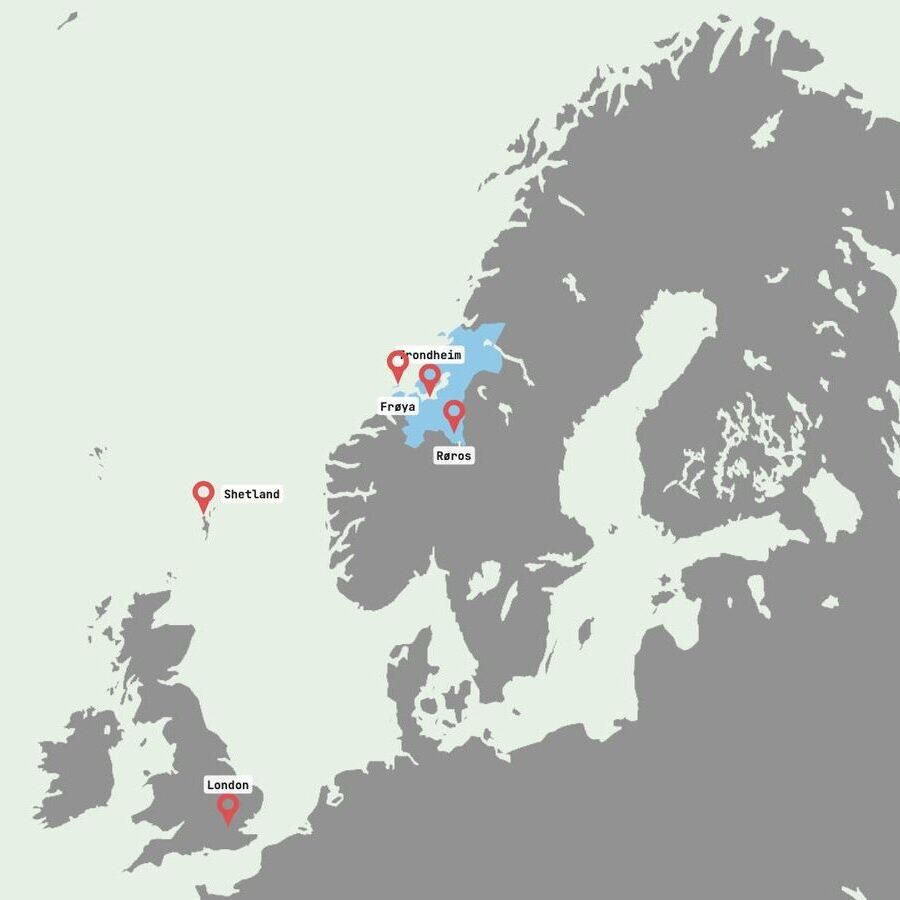
Shetland and Trøndelag: two coastal regions on either side of the North Sea, closer than many might think and connected by shared landscapes and storytelling tradition.
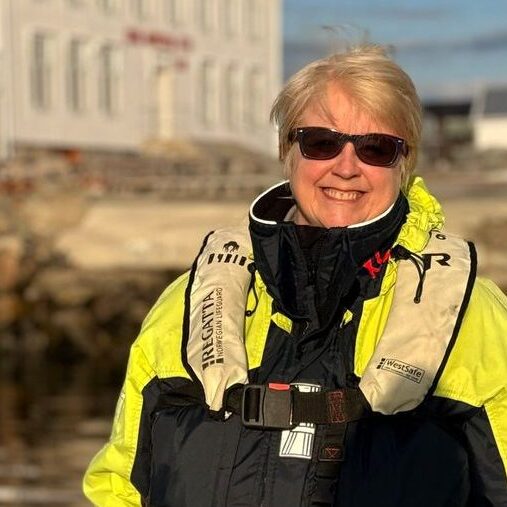
Louise Say on fam trip to Frøya at the historic Gaustadbrygga in the fishing village of Titran, Frøya — a location featured in films such as Everybody Hates Johan and Gold Run. – Photo: Solveig Sigmond Ræstad
The international success series Shetland, which is both geographically and visually closer to Norway than London, has a particularly strong amongst its Nordic neighbours. The newest season will premiere on NRK on March 27th as part of the national broadcaster’s traditional Easter crime programming.
In addition to Shetland, Say has worked on major productions including Les Misérables and Dracula for BBC and Netflix, alongside a long career in documentary filmmaking.
Collaboration Between Screen Scotland and Midgard Film Commission
The visit grew out of collaboration between Midgard Film Commission Norway and Screen Scotland. After Scotland was recently highlighted as Country in Focus by the Nordic Film Commissions, Solveig Ræstad, Head of Midgard Film Commission, reached out to Cheryl Conway, Head of Screen Commission at Screen Scotland, to ask if they could recommend someone from the Shetland production to share their experience of producing a major TV drama in a remote location.
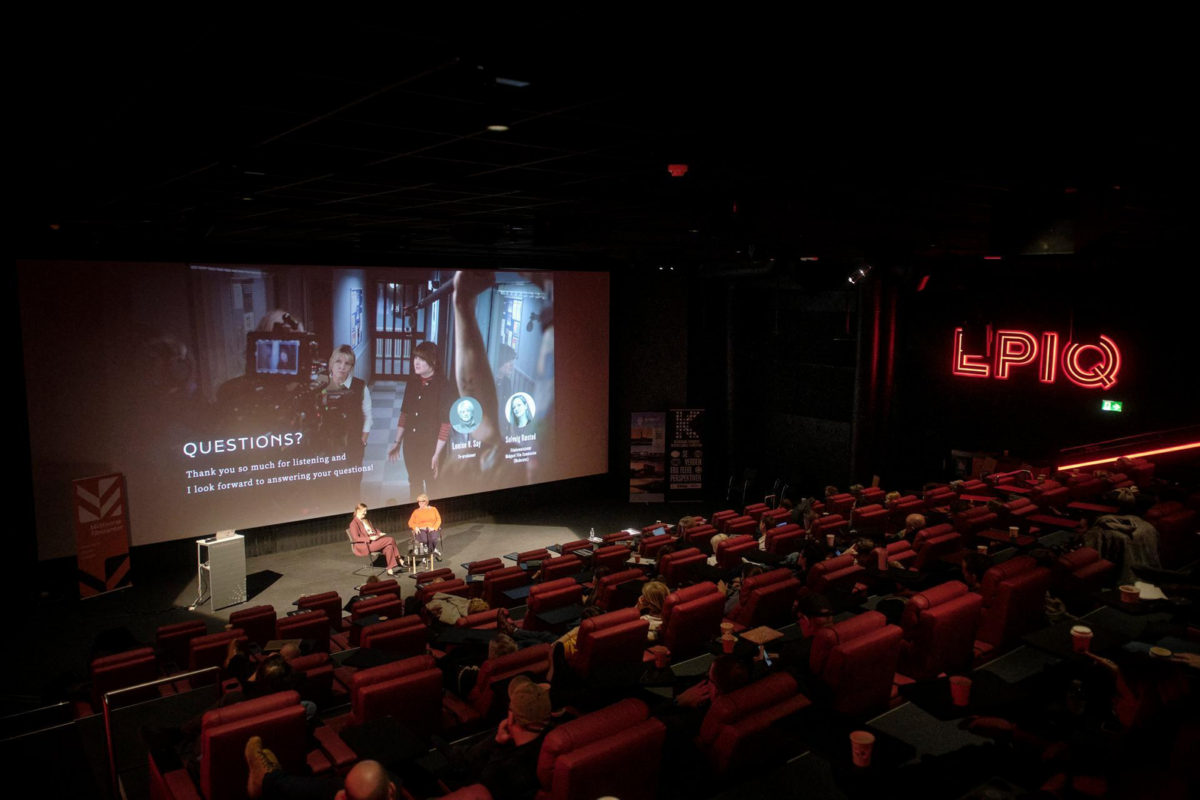
Q&A between film commissioner Solveig Sigmond Ræstad and Louise Say – Photo: Hallvar Bugge Johnsen Midgard Film Commission
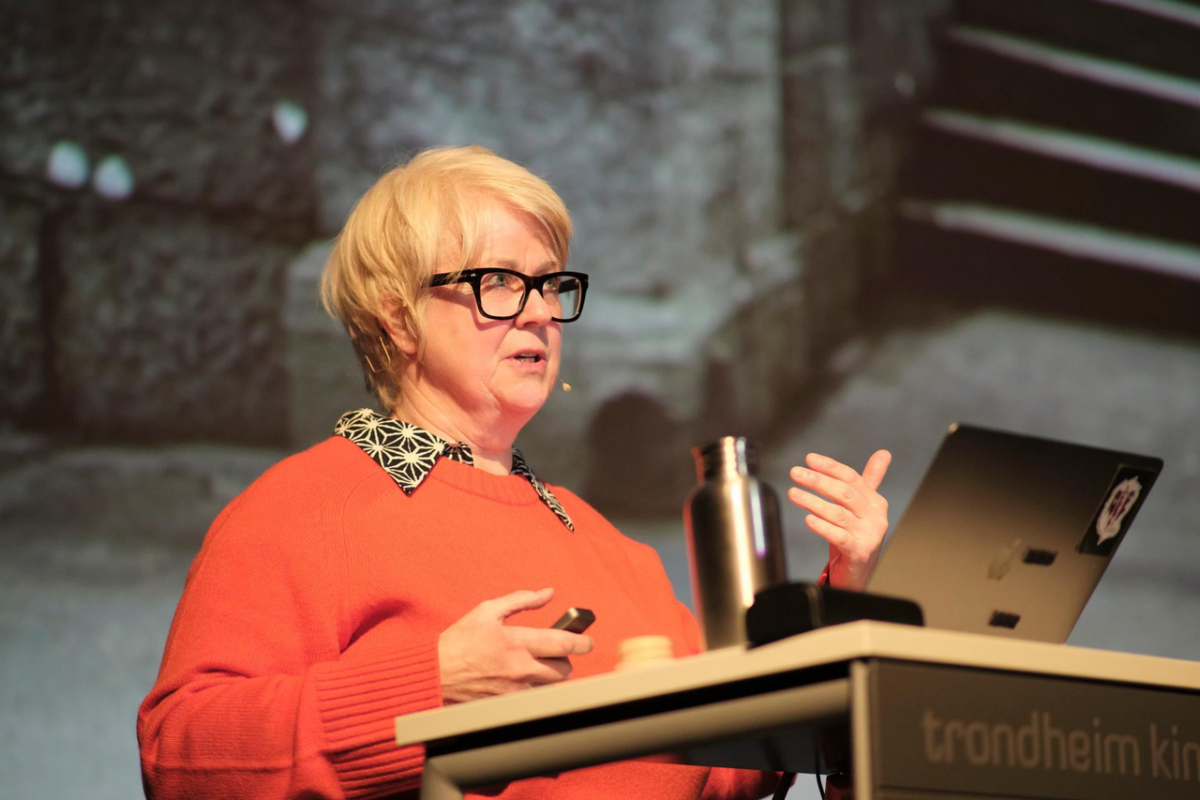
Louise Say held an engaging masteclass – Photo: Hallvar Bugge Johnsen Midgard Film Commission
Presenting the background for SHETLAND – Photo: Hallvar Bugge Johnsen Midgard Film Commission
In her masterclass Say shared insights from producing Shetland, one of the BBC’s most successful returning drama series internationally, filmed in the remote landscape of the Shetland Islands.
Her presentation focused on the realities of producing large-scale television drama outside major urban centres — from logistics and collaboration with local communities to building regional crew and production capacity.
The Q&A session following the masterclass explored regional production models, international competition for productions and the importance of predictable incentive systems.
By sharing experiences from Shetland, the visit offered valuable insight into how strong local identity, landscapes and communities can play an important role in internationally successful television drama.
– Louise Say’s visit highlights the growing dialogue between screen organisations in Scotland and Norway and the shared interest in developing sustainable production environments outside major cities, points the Midgard Film Commissioner Solveig Ræstad out.
Film Music in Trondheim
During her visit to Trondheim, Louise Say also visited Øra Studio, a recording studio that has increasingly been used for film music projects. Through the initiative Norwegian Film Music, Trondheim has in recent years begun to position itself as a place for recording film scores.
The city has a strong musical environment, including ensembles such as the internationally recognised Trondheim Soloists, as well as a large community of composers and musicians. Øra Studio is also exploring possibilities for further developing its recording facilities.
Louise V Say and Studio manager Oda Aaring at Øra studio, which has increasingly been used for orchestral and film music projects.
Exploring the region
Røros
As part of the visit, Say travelled through several parts of Trøndelag County, a vast region that spans from inland mountain landscapes along the Swedish border to the exposed islands and coastline of the Atlantic Sea.
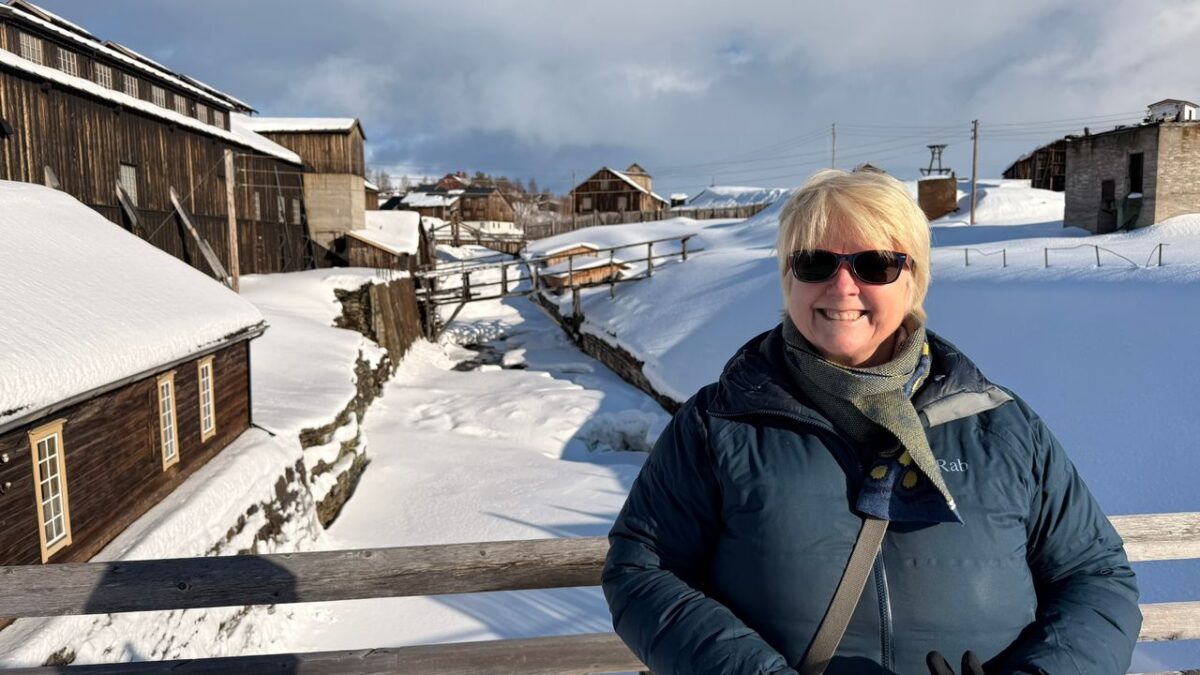
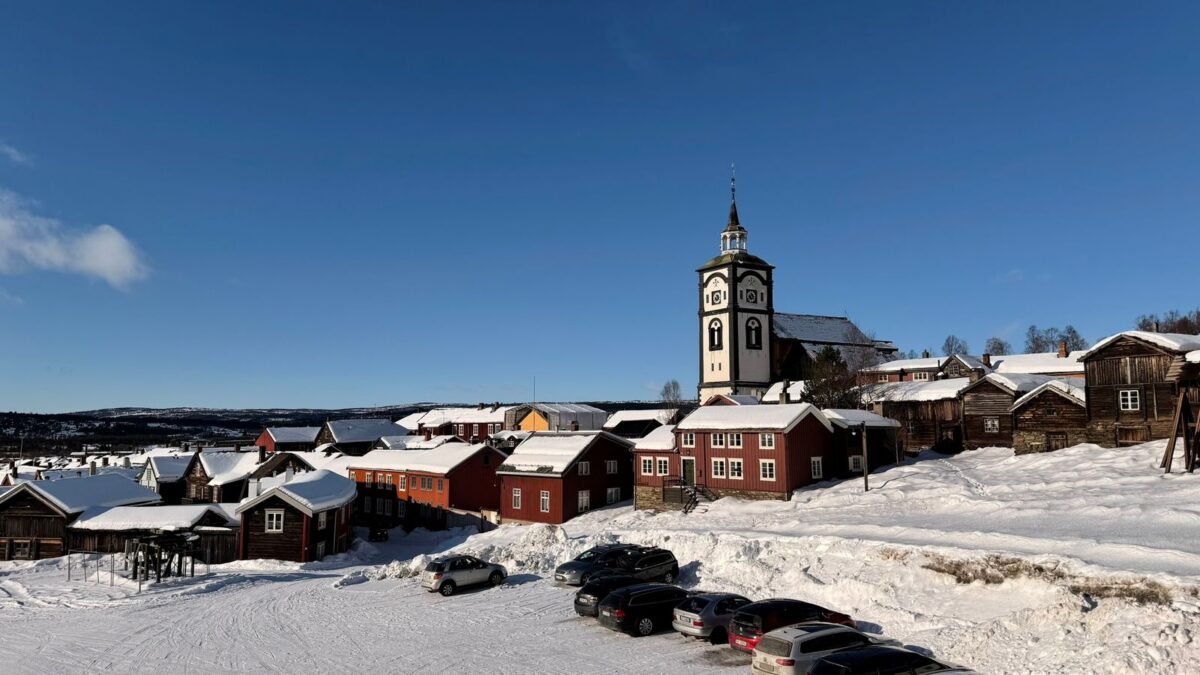
Røros is an UNESCO World Heritage mining town known for its preserved wooden architecture from the 18th century and distinctive winter landscapes. The town and surrounding landscapeshave a strong screen history and have featured in productions including Netflix’s Home for Christmas, HBO Europe’s Welcome to Utmark, and – going further back – the 1973 film A Doll’s House starring Jane Fonda.
For Say, the visit left a strong impression. Having worked in many striking locations throughout her career, she described Røros as a place that truly stands out — noting that she has seen many beautiful places, but that Røros felt“really special.”
At the frozen river by the old copper works in in the mining village of Røros – Photo: Solveig Sigmond Ræstad
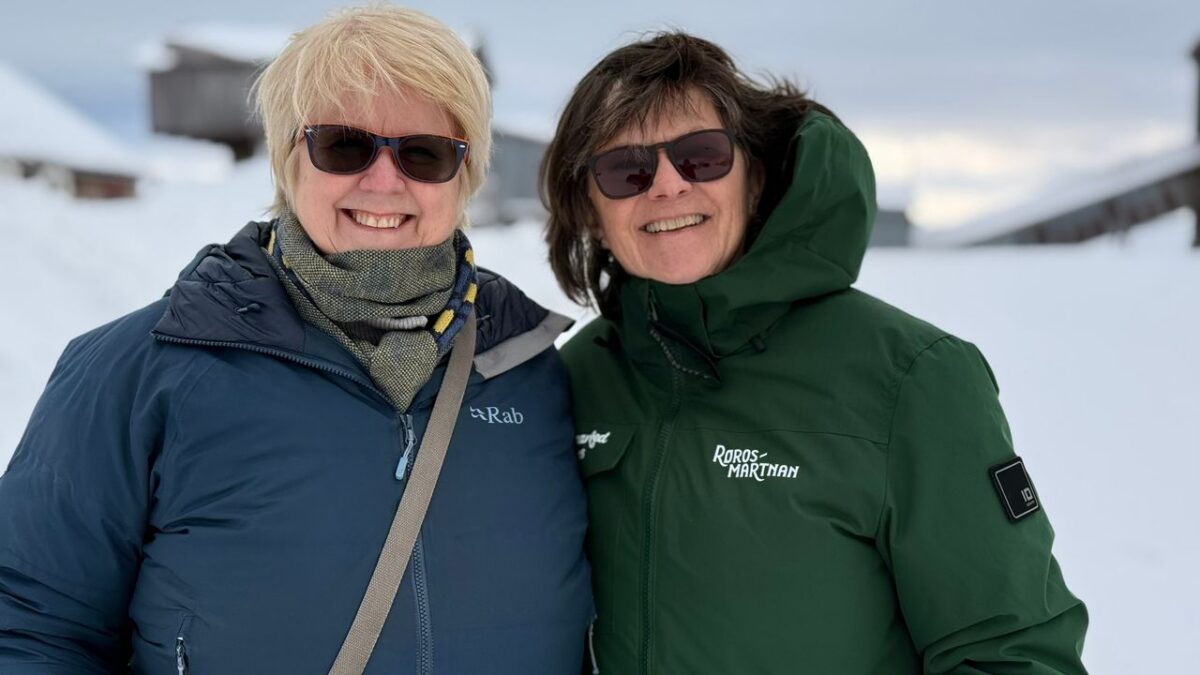
Louise Say and Film coordinator at Røros, Eli Riset – Photo: Solveig Sigmond Ræstad
Røros is known for its preserved wooden architecture from the 18th century and distinctive winter landscapes- Photo: Solveig Sigmond Ræstad
Frøya Islands
The visit also included Frøya Islands, where Say experienced the dramatic Atlantic coastline together with Mona Strømskag, the municipality’s film coordinator. During the visit, she met Mayor Kristin Furunes Strømskag, Deputy Mayor Ole Morten Sørvig, and representatives from the municipality’s cultural administration to discuss how screen production can contribute to regional development.
In recent years, Frøya and Midgard Film Commission have gained international recognition for their successful strategy to position the island as a film-friendly destination. This work was recognized with the EUFCN Location Award 2024, presented at the Berlin International Film Festival in 2025, making Frøya the first Norwegian location to receive the prize. Frøya and Midgard Film Commission later on surpassed this by winning the Global Production Award for Emerging Location in Cannes.
The municipality’s film strategy has since 2020 attracted several productions to the island, including Nordisk Film Production’s Everybody Hates Johan, Spætt Film’s Norwegian Dream, 74 Entertainment’s Gold Run(Gulltransporten)for Viaplay, and the Netflix series Billionaire Island, produced by Rubicon TV.
Recently Frøya has hosted the upcoming drama series Rinnan, produced by Miso Film Norway in collaboration with Blaane Film for Amazon Prime Video and TV 2.
For a producer accustomed to filming in the windswept landscapes of the Shetland Islands, the rugged coastal environment of Trøndelag felt instantly familiar, Say noted — made even more compelling by learning about the municipality’s ambitious film strategy.
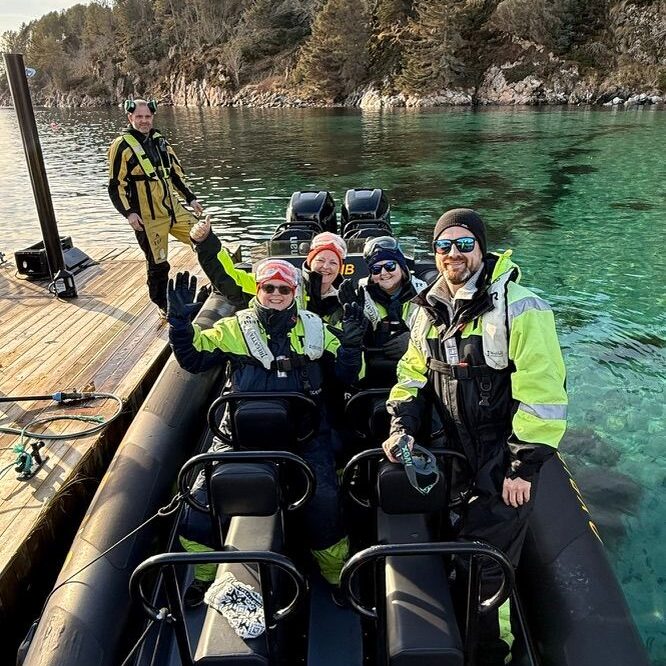
Heading out into the rugged Atlantic waters around Frøya. Front: Louise V Say and Ole Morten Sørvig. Second row: Film Commissioner Solveig Ræstad and Film Coordinator Mona Strømskag. At the back: RIB pilot Even Johansen from ØyRIB.
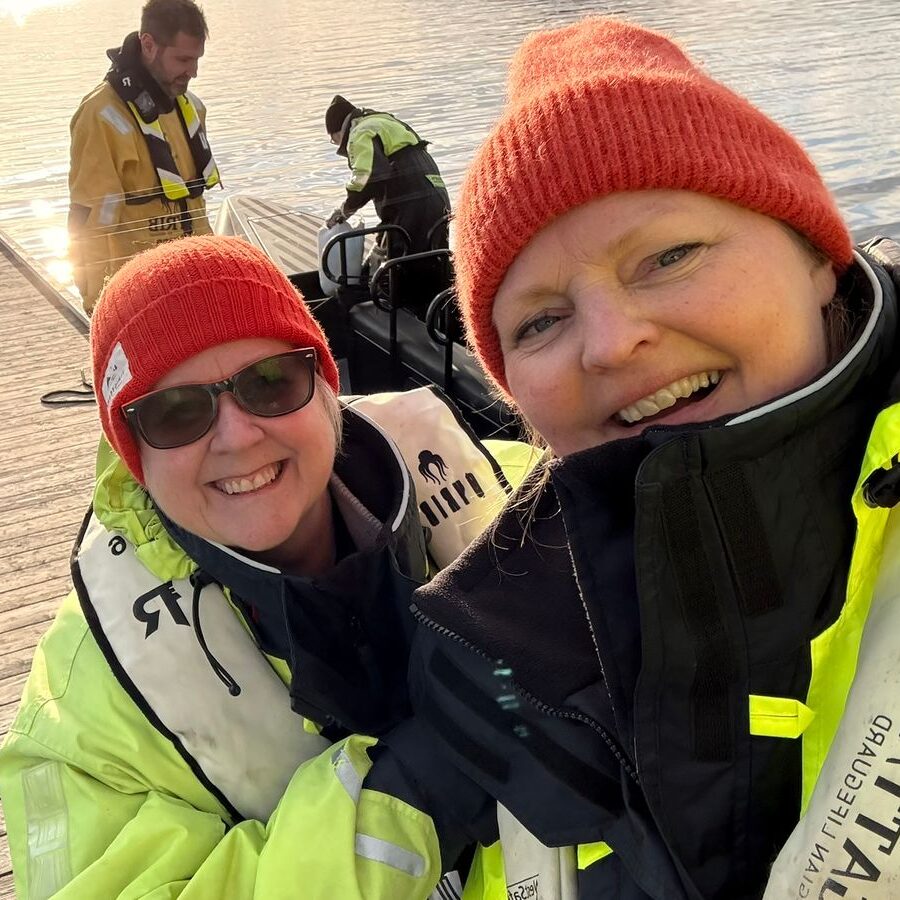
Louise Say and Film Commissioner Solveig Ræstad in survival suits — the appropriate attire for a day exploring Frøya’s rugged Atlantic coastline. – Photo: Solveig Sigmond Ræstad
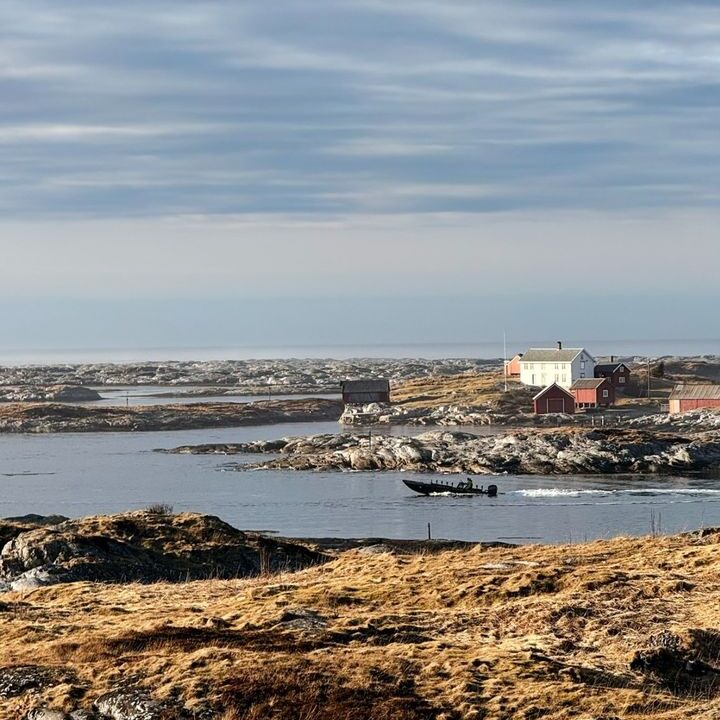
Exploring the picturesque coastal landscape of Frøya, home to more than 5,400 islands. On a sunny day it feels like paradise — and when the Atlantic storms roll in, it becomes far more dramatic. Photo: Solveig Sigmond Ræstad
Privacy Policy
The Privacy Statement is about how this website collects and uses visitor information. The statement contains information that you are entitled to when collecting information from our website, and general information about how we treat personal data.The legal owner of the website is the processing officer for the processing of personal data. It is voluntary for those who visit the web sites to provide personal information regarding services such as receiving newsletters and using the sharing and tip services. The treatment basis is the consent of the individual, unless otherwise specified.
1. Web analytics and cookies (cookies)
As an important part of the effort to create a user-friendly website, we look at the user pattern of those who visit the site. To analyze the information, we use the Google Analytics analysis tool.Google Analytics uses cookies (small text files that the site stores on the user's computer), which registers the users' IP address and provides information about the individual user's online movements. Examples of what the statistics give us answers to are; how many people visit different pages, how long the visit lasts, what websites users come from and what browsers are used. None of the cookies allow us to link information about your use of the site to you as an individual.The information collected by Google Analytics is stored on Google servers in the U.S.. The information received is subject to the Google Privacy Policy.An IP address is defined as a personal information because it can be traced back to a particular hardware and thus to an individual. We use Google Analytics's tracking code to anonymize the IP address before the information is stored and processed by Google. Thus, the stored IP address can not be used to identify the individual user.
2. Search
If the webpage has search function, it stores information about what keywords users use in Google Analytics. The purpose of the storage is to improve our information service. The search usage pattern is stored in aggregate form. Only the keyword is saved and they can not be linked to other information about the users, such as the IP addresses.
3. Share / Tips service
The "Share with others" feature can be used to forward links to the site by email, or to share the content of social networking. Tips for tips are not logged with us, but only used to add the tips to the community. However, we can not guarantee that the online community does not log this information. All such services should therefore be used wisely. If you use the email feature, we only use the provided email addresses to resend the message without any form of storage.
4. Newsletter
The website can send out newsletters by email if you have registered to receive this. In order for us to be able to send e-mail, you must register an e-mail address. Mailchimp is the data processor for the newsletter. The e-mail address is stored in a separate database, not shared with others and deleted when you unsubscribe. The e-mail address will also be deleted if we receive feedback that it is not active.
5. Registration, form
The website may have a form for registration, contact form or other form. These forms are available to the public to perform the tasks they are supposed to do.Registration form is for visitors to sign up or register.Contact form is for visitors to easily send a message to the website's contact person.We ask for the name of the sender and contact information for this. Personal information we receive is not used for purposes other than responding to the inquiry.The form is sent as email via Mailgun as a third party solution. The entire submission will be stored at Mailgun for 24 hours. Between 24 hours and 30 days, only mailheader is stored before the submission is deleted after 30 days. The reason for this storage is to confirm whether emails are sent from the website and forwarded to the correct recipient.Once the email is received by the recipient, it is up to the recipient to determine the data processing needs of the email.
6. Page and service functionality
Cookies are used in the operation and presentation of data from websites. Such cookies may contain language code information for languages selected by the user. There may be cookies with information supporting the load balancing of the system, ensuring all users the best possible experience. For services that require login or search, cookies can be used to ensure that the service presents data to the right recipient.